
Growing up a hunter/jumper rider, foxhunting is something I NEVER thought I’d do. I love the safe walls of my riding ring, plus I’ve been a vegetarian for most of my adult life.
That being said, from the moment I grew roots in Geneseo, NY I knew I was in the heart of foxhunting country. Geneseo is home to the Genesee Valley Hunt, which is currently in its 145th season (4.5x older than I am). The hunt is led by MFH Marion Thorne, and on Mondays, Wednesdays, Thursdays and Saturdays the “field” sets out into the countryside.
One of the most overwhelming parts of joining the hunt has been learning all of the rules. Luckily, new members are paired up with an older member, and are only allowed to go out on hunts with their “sponsor.” Here are a few things I’ve learned in my first month of foxhunting.
1. Foxhunting takes place for much of the year.
The foxhunting season is broken down into a few different phases. The full season seems to span from June to December, and our club has also done some hunting down south during the Spring months.
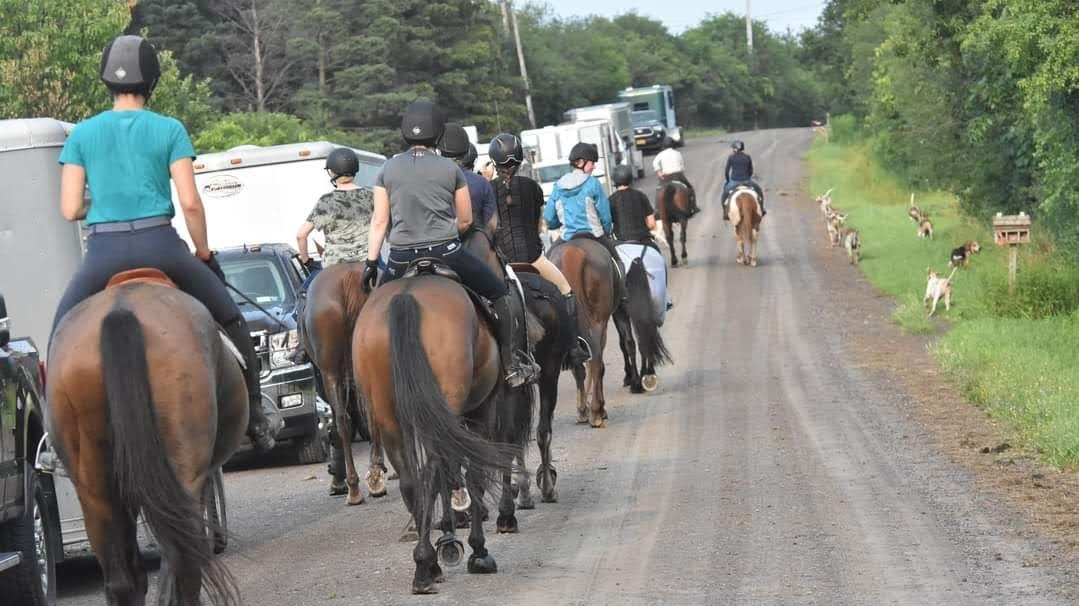
The season starts with “hound-jogging” in late June/early July. During two weeks, all riders are encouraged to go out in the morning and jog with the hunt hounds and staff members. Typically, the riders would meet near the hound’s kennels, and take the hounds up and down nations road. During hound-jogging, all horses and riders are only walking/trotting. This offered a great opportunity to get out new horses (including my own 4 year old thoroughbred), get them used to the hounds, and the rules of the hunt. Some things we had the opportunity to practice included not passing other horses, and “making way” for the field. Hound-jogging is open to anyone in the community who wants to attend – so you do not need to join the hunt to take part.
Then, “cubbing” starts shortly thereafter. Cubbing is the equivalent of an “informal” hunting season. The hunt meets 4x per week to hunt. Horses and riders may wear casual attire. Anyone who goes out cubbing must be a member of the hunt. Non-members are allowed to pay a capping fee to hunt 3x per year – and “capping” is allowed during cubbing and formal hunting.
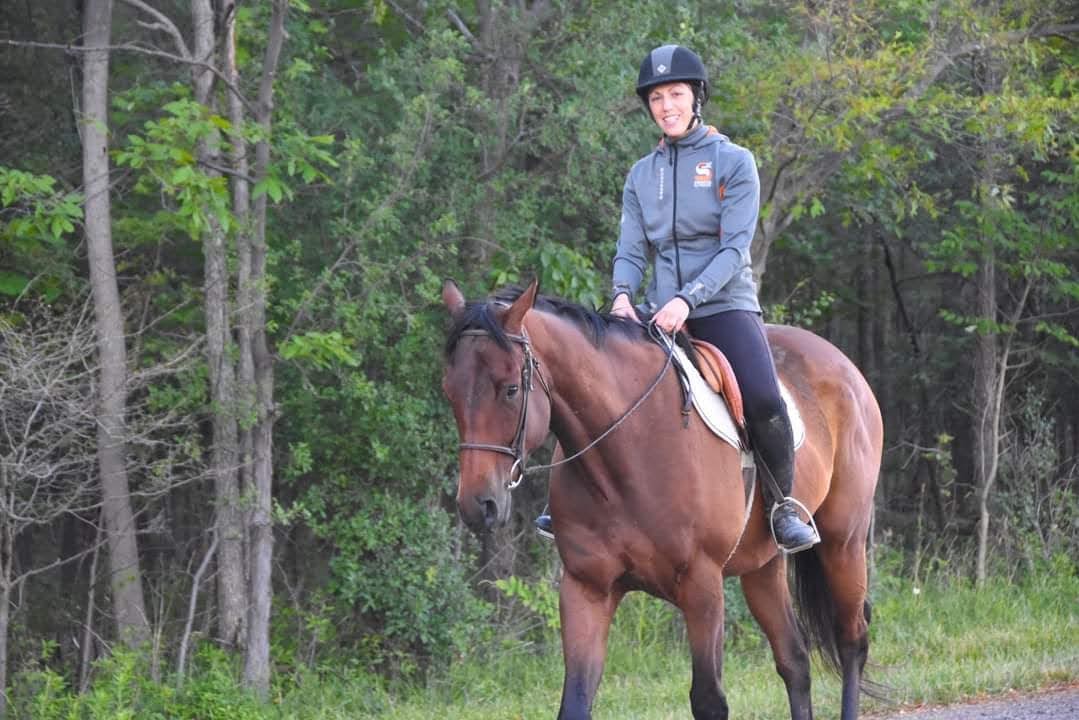
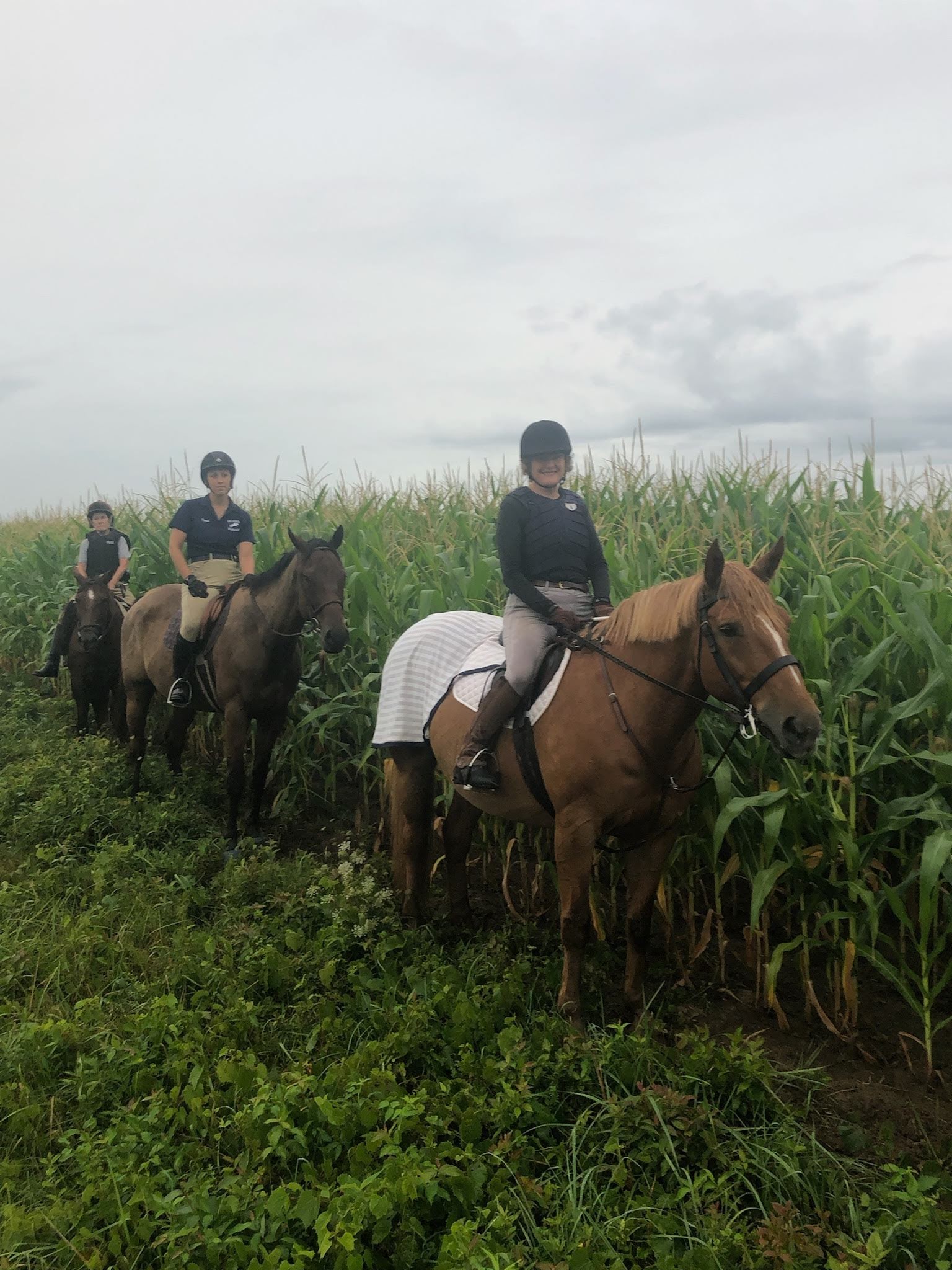
As of the writing of this blog – I have been out during cubbing season approximately 9 times. My horse Kona and I have learned how to navigate some gnarly footing (think 2 feet of mud), and we’ve learned how to quietly and correctly exit the hunt on a morning that I have to get to the office.
Finally, there is formal hunting season. Formal hunting kicks off with a parade of horses and hounds down Main St. in Geneseo in mid-September. During formal hunting, horses and rider must be properly turned out (think show-ring ready). Riders must wear formal hunt coats, tan/khaki/rust-colored breeches, a stock tie, black or brown riding gloves, and clean/polished tall boots.
2. Hounds must be called “Hounds”, and they are the MVPs of the hunt field.
A hound is a hound – not a dog or a puppy. It’s a big no-no to refer to the hounds as dogs. Hunt members are also not allowed to speak to the hounds – they are working when at a hunt and only staff members need to interact with them.
The hounds are also pivotal to each day’s hunt. They work to pick up a scent and ultimately determine where the hunt will go. That said, the hound’s success in picking up a scent will determine whether you have a fast or slow day.
Things I’ve learned so far – if you leave the hunt, you cannot leave a stray hound. You must lead the hound back to the hunt, or locate the hound truck.
3. Make sure you can keep up!
Wherever you are in the field, make sure you can keep up with the hunt! If you are worried you will lose the riders in front of you, put yourself further back in the field.
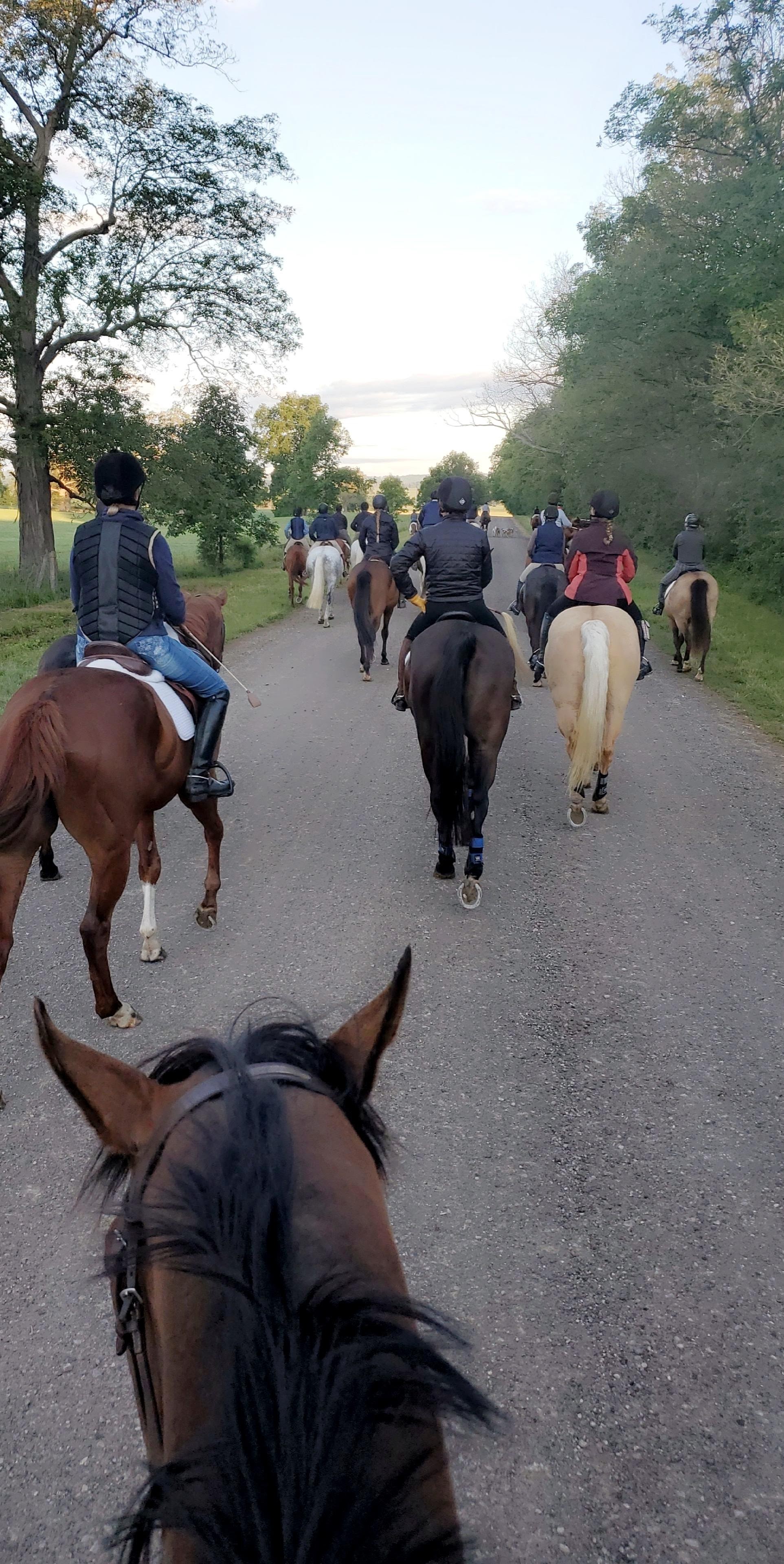
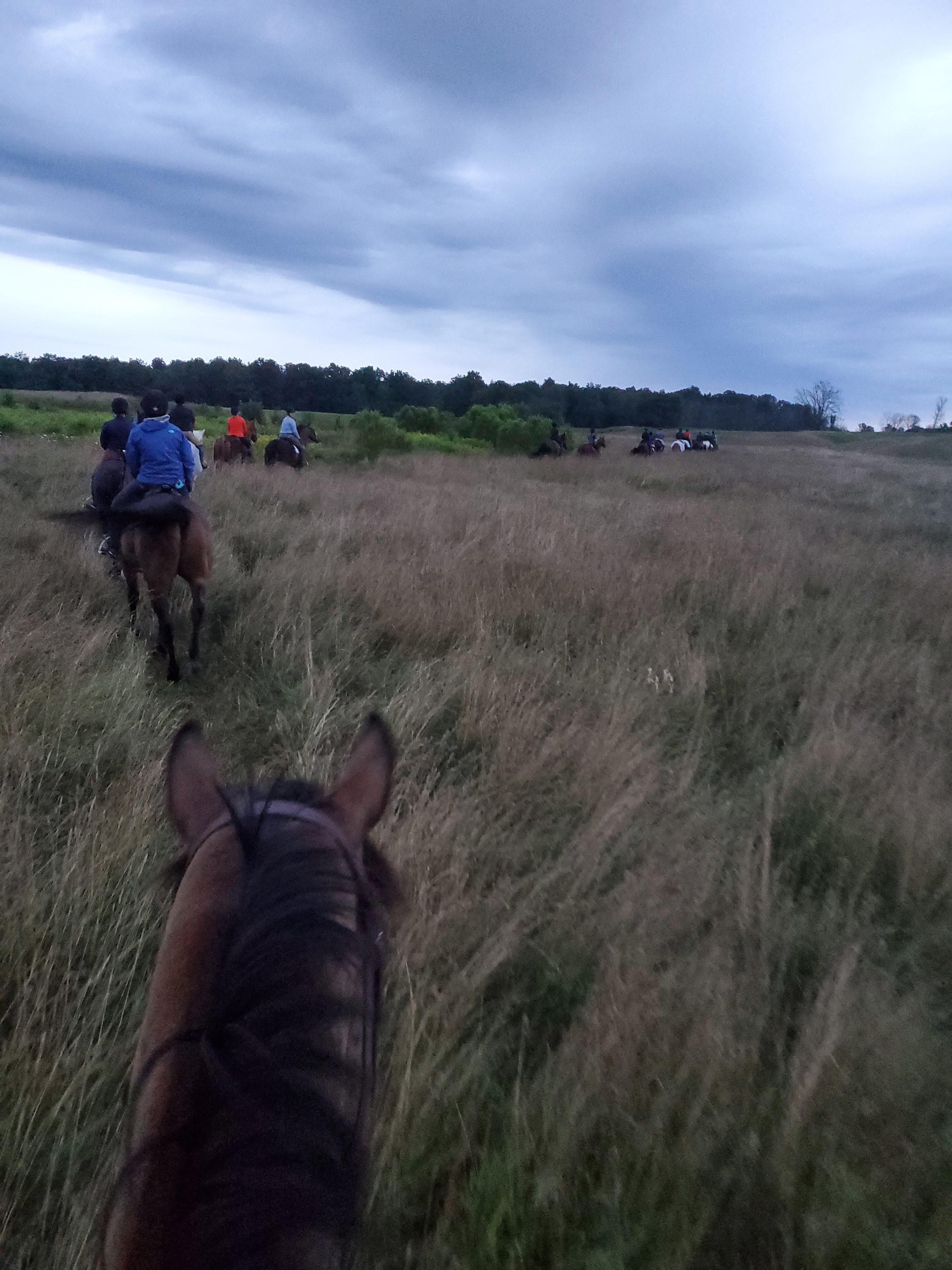
The field is typically divided into 3 groups – first flight, second flight and third flight/hill-toppers. First flight rides at all 4 gaits and the front of first flight will typically jump all obstacles in their path. The back of first flight will keep up with first flight, but may not jump every fence. Second flight rides at the walk, trot and canter, and will always access the gates. Third flight/hill-toppers will often move at a slower, more relaxed pace. Hill-toppers will typically just walk and trot, and keep up with the hunt as best they can. All flights must ensure that they do no cross the path of the hunt, and that they keep the hunt in front of them.
While I am walk, trot, cantering and galloping in the field, I am trying not to jump my young and inexperienced horses this season. I know that the front of first-flight is not the place for me. I hunt with my sponsor and she will often decide (on any given day) where we should place ourselves in the field.
So far, we’ve only lost the field once! And fortunately the only repercussions were that we ended our day of hunting on the early side.
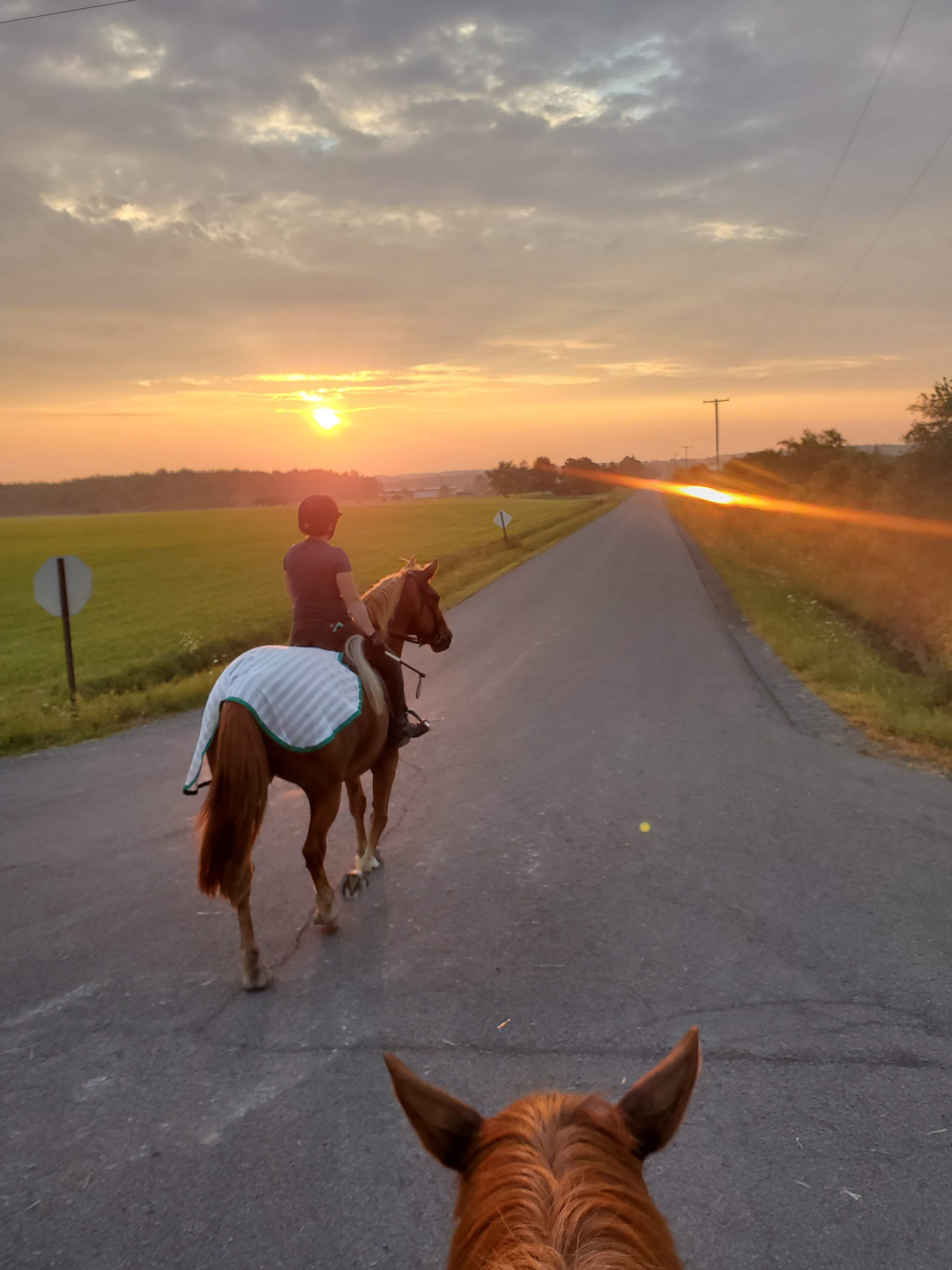
All in all, my first few weeks as a “real” member of the Genesee Valley Hunt have been exciting. I’ve enjoyed waking up at 4am (no really, I have), loading up my horse and starting the morning with fresh air and a quick gallop. Foxhunting is already making me a better and more well-rounded rider. I can feel it improving my balance and my endurance. I’m looking forward to the start of formal hunting season and the next few months of riding!
 Julianne Pangal